Books, essays, and field notes.
Long-form thinking on the work I care about, instructional design, AI fluency, public speaking, and the small disciplines that quietly separate leaders who hold up under pressure from leaders who don't.
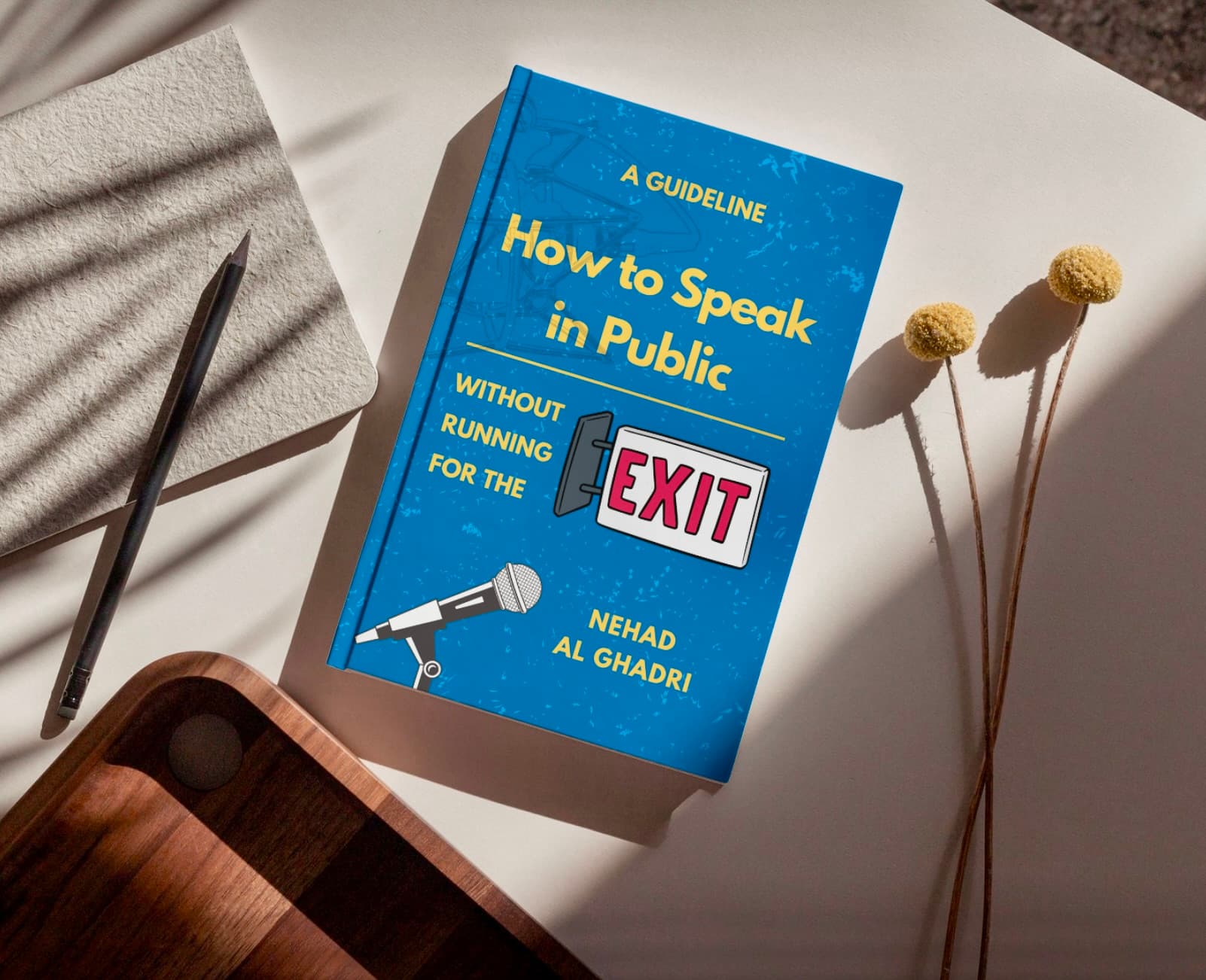
How to Speak in Public Without Running for the Exit.
A 117-page field guide for introverts, accidental trainers, and anyone who’s ever felt their stomach drop when the projector clicks on. Written from the perspective of someone who started out hiding behind books and somehow ended up running corporate training programmes for a living.

Published long-form.
Career Catalyst
Strategies and trends to elevate your career through continuous learning. Published on LinkedIn, read by 16K+ followers, new editions roughly weekly.
Articles, published on LinkedIn.
Weekly reflections on growth, leadership, AI, and the human skills that compound over a career. Each one opens on LinkedIn.
When AI Enters the Room, Leadership Gets Exposed
AI isn't a technology rollout, it's a diagnostic. Strong leaders who ask good questions and develop their people become more powerful with AI. Leaders whose authority quietly rested on gatekeeping information find themselves suddenly, uncomfortably exposed. Psychological safety and leadership culture, not tools, decide whether adoption works.
AI Solved the Knowledge Problem. L&D Hasn't Caught Up.
Traditional L&D programmes still optimise for knowledge transfer, a problem AI has quietly made obsolete. The real bottleneck now is judgment: the ability to make good decisions under pressure with incomplete information. The argument here is that learning design needs to be rebuilt around observable behaviour and decision scenarios, not content delivery and knowledge checks.
Your Leadership Pipeline Is Burning. L&D Lit the Match.
71% of leaders report rising stress. 40% are considering leaving. The conventional response is more course content, which is exactly why the pipeline is burning. Leadership capability doesn't develop in classrooms; it develops through contextual, on-the-job work embedded in the culture. The fix isn't more modules. It's a different theory of change.
Strategic Thinking Isn't Seniority. It's a Way of Seeing.
Strategic influence doesn't come from a title or an IQ score, it comes from how you frame the problem in front of you. Too many capable executors feel stuck being seen as 'doers' rather than thinkers. Five principles for shifting that perception, starting with asking 'why' before 'how' and making trade-offs explicit instead of hoping they'll sort themselves out.
Decision Fatigue: The Invisible Drain on High Performers
The productivity problem most high performers have isn't time management, it's decision overload. Every decision costs mental energy, and by midday the tank is empty. Five truths about decision fatigue most leaders don't take seriously, and the systems, AI tools, and reflection practices that quietly solve it.
Managing Upward: The Skill That Unlocks Growth Without Authority
Professional growth often depends less on individual effort and more on how well you manage the people above you. Not manipulation, clarity. Strategic communication with leadership creates faster decisions, better alignment, and more visibility for capable professionals who'd otherwise get stuck. The quiet skill that senior careers actually run on.
Why Your Emotional Control Matters More Than Your Expertise
Under pressure, emotional intelligence is the capability that separates leaders who hold teams together from leaders who quietly make everything worse. Pressure doesn't create new behaviours; it amplifies the ones that were already there. A leader's emotional state is the single biggest variable in the psychological safety of the room, and the team's performance follows it directly.